
The Complete Guide to Channel Incentive Programs
Channel incentive programs are strategic tools vendors use to influence the behaviors and outcomes of their partner ecosystems. In a landscape where partners often represent multiple vendors, incentives become a way to differentiate, build loyalty, and drive indirect sales performance.
Typically, incentives are monetary rewards offered to partners who achieve or exceed defined business objectives. These include co-op funds, market development funds (MDF), spiffs, rebates, and points-based programs. Regardless of type, the goal remains the same: to boost partner engagement, grow revenue, and reinforce the partnership.
Effective incentive programs require clarity, accessibility, and alignment with partner needs. Whether targeting a few select partners or thousands globally, vendors must ensure incentives are easy to understand, tracked in real time, and tied to clear KPIs.
Understanding the Different Types of Partner Incentives
Channel incentives are not one-size-fits-all. Each program serves specific purposes based on the partner type, maturity, and business goals.
1. Co-op Funds
Accrual-based marketing funds awarded based on a partner’s revenue attainment. These are best for partners in the growth phase who are heavily invested in the vendor’s offerings. Effective when partners have solid marketing capabilities and a clear plan to generate pipeline.
2. Market Development Funds (MDF)
Discretionary funds provided based on submitted business cases. MDFs are versatile and used for awareness campaigns, demand generation, or enablement. They are especially effective for new or underperforming partners who need a boost.
3. Rebates
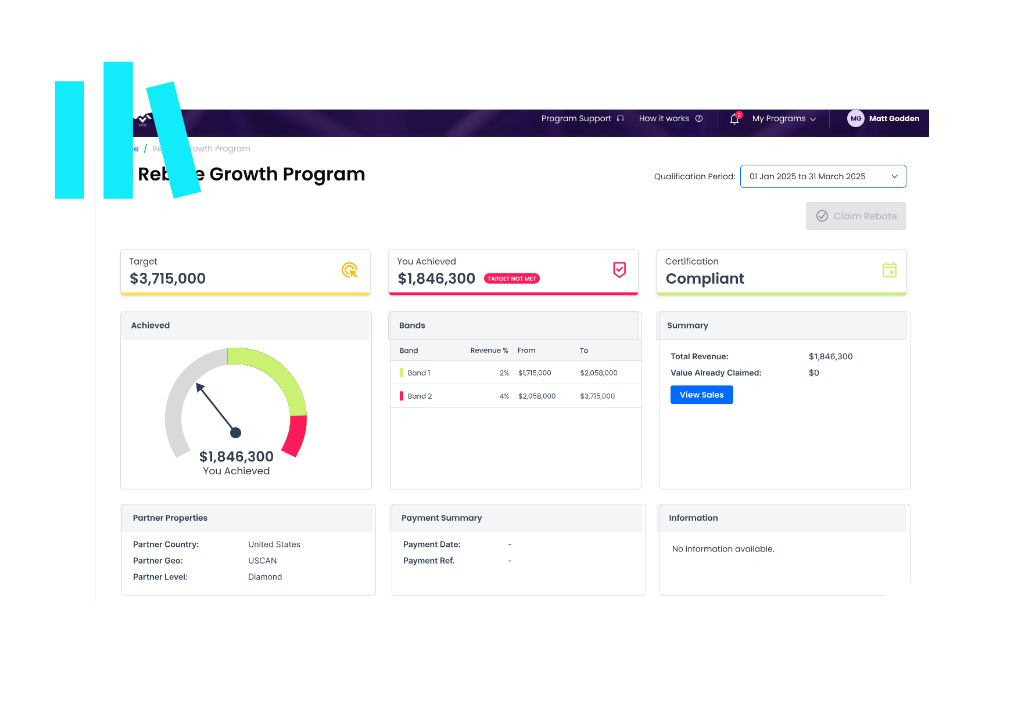
Backend incentives paid upon achieving revenue or strategic goals. These are useful for long-term business alignment, customer retention, and targeted growth objectives.
4. Solution Development or “Big Bet” Funds
Discretionary funds supporting joint solution development. Effective for high-value initiatives, such as launching new technology, complex POCs, or building long-term, co-branded solutions.
5. Spiffs
Short-term, tactical incentives (cash, cards, or points) paid directly to individuals. Ideal for driving immediate behavior like new logo acquisition, upselling, or competitive displacement.
6. Points-Based Rewards
Loyalty-style programs where participants accumulate points over time. Effective for sustaining long-term engagement, especially with sales and technical staff.
How to Choose the Right Incentive Model
Choosing the right incentive means aligning the reward mechanism with the behavior you’re trying to drive. Here are frameworks to help:
Match Incentive to Objective
- Quick wins: Use SPIFFs to move the needle fast.
- Brand loyalty: Implement points systems for long-term engagement.
- Strategic investments: Use MDF or Solution Development Funds.
- Revenue acceleration: Rebates help with closing fiscal targets.
Consider the Recipient
- Company-level rewards: Cash rebates, co-op, MDF.
- Individual rewards: SPIFFs, prepaid cards, or loyalty points.
- Support teams: Target SEs and technical influencers with specific incentives.
Think Globally, Act Locally
- Align programs with local laws, tax implications, and market maturity.
- Ensure partners have time to operationalize the program into their sales cycle.
What Makes an Incentive Effective?
Behavioral Economics in Channel Incentives
Great incentives tap into behavioral psychology. Salespeople respond best to incentives that are:
- Simple: Too many rules lead to confusion and disinterest.
- Timely: Fast payouts reinforce the connection between action and reward.
- Visible: Dashboards showing progress drive momentum.
- Personalized: Tailored rewards based on individual or regional preferences increase participation.
Key Elements of a High-Impact Incentive
- Clear Goals and Rules
- Partners must know what they’re being rewarded for and how to win.
- Ease of Access
- Partners should be able to register, participate, and redeem rewards easily.
- Real-Time Tracking
- Dashboards help partners see progress and stay motivated.
- Fast Fulfillment
- Delayed rewards reduce effectiveness. Vendors should aim for instant or near-instant gratification.
- Program Freshness
- Change the offering periodically to maintain interest and relevance.
In conclusion, channel incentive programs are powerful levers for partner engagement and sales growth. The key lies in choosing the right model for the right audience, executing it flawlessly, and continuously measuring and optimizing performance. A well-structured incentive program can turn partners into advocates and transactional relationships into strategic alliances.
Gather further insights from our blog on: Building and Managing Effective Channel Incentive Programs.
To find out more, schedule a demo with the Channelscaler team today!